Obama's Letter to President Ahmadinejad
Revealed: the letter Obama team hope will heal Iran rift
Symbolic gesture gives assurances that US does not want to topple Islamic regime
- guardian.co.uk, Thursday 29 January 2009 01.44 GMT
- Article history
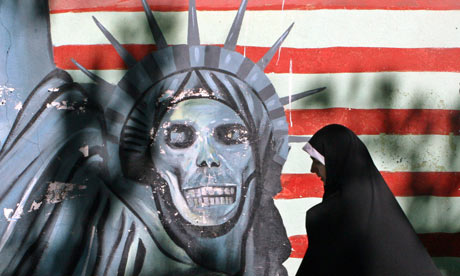
One draft urges Iranians to consider the benefits of losing their pariah status in the west. Photograph: Vahid Salemi/AP
Officials of Barack Obama's administration have drafted a letter to Iran from the president aimed at unfreezing US-Iranian relations and opening the way for face-to-face talks, the Guardian has learned.
The US state department has been working on drafts of the letter since Obama was elected on 4 November last year. It is in reply to a lengthy letter of congratulations sent by the Iranian president, Mahmoud Ahmadinejad, on 6 November, 2008
Revealed: the letter Obama team hope will heal Iran rift
Symbolic gesture gives assurances that US does not want to topple Islamic regime
- guardian.co.uk, Thursday 29 January 2009 01.44 GMT
- Article history
One draft urges Iranians to consider the benefits of losing their pariah status in the west. Photograph: Vahid Salemi/AP
Officials of Barack Obama's administration have drafted a letter to Iran from the president aimed at unfreezing US-Iranian relations and opening the way for face-to-face talks, the Guardian has learned.
The US state department has been working on drafts of the letter since Obama was elected on 4 November last year. It is in reply to a lengthy letter of congratulations sent by the Iranian president, Mahmoud Ahmadinejad, on 6 November.
Diplomats said Obama's letter would be a symbolic gesture to mark a change in tone from the hostile one adopted by the Bush administration, which portrayed Iran as part of an "axis of evil".
It would be intended to allay the suspicions of Iran's leaders and pave the way for Obama to engage them directly, a break with past policy.
State department officials have composed at least three drafts of the letter, which gives assurances that Washington does not want to overthrow the Islamic regime, but merely seeks a change in its behaviour. The letter would be addressed to the Iranian people and sent directly to Iran's supreme leader, Ayatollah Ali Khamenei, or released as an open letter.
One draft proposal suggests that Iran should compare its relatively low standard of living with that of some of its more prosperous neighbours, and contemplate the benefits of losing its pariah status in the west. Although the tone is conciliatory, it also calls on Iran to end what the US calls state sponsorship of terrorism.
The letter is being considered by the new secretary of state, Hillary Clinton, as part of a sweeping review of US policy on Iran. A decision on sending it is not expected until the review is complete.
In an interview on Monday with the al-Arabiya television network, Obama hinted at a more friendly approach towards the Islamic Republic.
Ahmadinejad said yesterday that he was waiting patiently to see what the Obama administration would come up with. "We will listen to the statements closely, we will carefully study their actions, and, if there are real changes, we will welcome it," he said.
Ahmadinejad, who confirmed that he would stand for election again in June, said it was unclear whether the Obama administration was intent on just a shift in tactics or was seeking fundamental change. He called on Washington to apologise for its actions against Iran over the past 60 years, including US support for a 1953 coup that ousted the democratically elected government, and the US shooting down of an Iranian passenger plane in 1988.
The state department refused to comment yesterday on the draft letters.
US concern about Iran mainly centres on its uranium enrichment programme, which Washington claims is intended to provide the country with a nuclear weapons capability. Iran claims the programme is for civilian purposes.
The diplomatic moves are given increased urgency by fears that Israel might take unilateral action to bomb Iranian nuclear facilities.
The scale of the problem facing the new American president was reinforced yesterday when a senior aide to Ahmadinejad, Aliakbar Javanfekr, said that, despite the calls from the US, Iran had no intention of stopping its nuclear activities. When asked about a UN resolution calling for the suspension of Iran's uranium enrichment, Javanfekr, the presidential adviser for press affairs, replied: "We are past that stage."
One of the chief Iranian concerns revolves around suspicion that the US is engaged in covert action aimed at regime change, including support for separatist groups in areas such as Kurdistan, Sistan-Baluchestan and Khuzestan.
The state department has repeatedly denied that there is any American support for such groups.
In its dying days, the Bush administration was planning to open a US interests section in the Iranian capital Tehran, one step down from an embassy. Bush's secretary of state, Condoleezza Rice, said that never happened because attention was diverted by the Russian invasion of Georgia. Others say that rightwingers in the Bush administration mounted a rearguard action to block it.
The idea has resurfaced, but if there are direct talks with Iran, it may be decided that a diplomatic presence would obviate the need for a diplomatic mission there, at least in the short term.
While Obama is taking the lead on policy towards Iran, the administration will soon announce that Dennis Ross will become a special envoy to the country, following the appointments last week of George Mitchell, the veteran US mediator, as special envoy to the Middle East, and Richard Holbrooke, who helped to broker the Bosnia peace agreement, as special envoy to Pakistan and Afghanistan.
Ross, who took a leading role in the Middle East peace talks in Bill Clinton's administration, will be responsible on a day-to-day basis for implementing policy towards Iran.
In a graphic sign of Iranian mistrust, the hardline newspaper Kayhan, which is considered close to Ayatollah Ali Khamenei, has denounced Ross as a "Zionist lobbyist".
Saeed Leylaz, a Tehran-based analyst, said a US letter would have to be accompanied by security guarantees and an agreement to drop economic sanctions. "If they send such a letter it will be a very significant step towards better ties, but they should be careful in not thinking Tehran will respond immediately," he said.
"There will be disputes inside the system about such a letter. There are lot of radicals who don't want to see ordinary relations between Tehran and Washington. To convince Iran, they should send a very clear message that they are not going to try to destroy the regime."
.
Diplomats said Obama's letter would be a symbolic gesture to mark a change in tone from the hostile one adopted by the Bush administration, which portrayed Iran as part of an "axis of evil".
It would be intended to allay the suspicions of Iran's leaders and pave the way for Obama to engage them directly, a break with past policy.
State department officials have composed at least three drafts of the letter, which gives assurances that Washington does not want to overthrow the Islamic regime, but merely seeks a change in its behaviour. The letter would be addressed to the Iranian people and sent directly to Iran's supreme leader, Ayatollah Ali Khamenei, or released as an open letter.
One draft proposal suggests that Iran should compare its relatively low standard of living with that of some of its more prosperous neighbours, and contemplate the benefits of losing its pariah status in the west. Although the tone is conciliatory, it also calls on Iran to end what the US calls state sponsorship of terrorism.
The letter is being considered by the new secretary of state, Hillary Clinton, as part of a sweeping review of US policy on Iran. A decision on sending it is not expected until the review is complete.
In an interview on Monday with the al-Arabiya television network, Obama hinted at a more friendly approach towards the Islamic Republic.
Ahmadinejad said yesterday that he was waiting patiently to see what the Obama administration would come up with. "We will listen to the statements closely, we will carefully study their actions, and, if there are real changes, we will welcome it," he said.
Ahmadinejad, who confirmed that he would stand for election again in June, said it was unclear whether the Obama administration was intent on just a shift in tactics or was seeking fundamental change. He called on Washington to apologise for its actions against Iran over the past 60 years, including US support for a 1953 coup that ousted the democratically elected government, and the US shooting down of an Iranian passenger plane in 1988.
The state department refused to comment yesterday on the draft letters.
US concern about Iran mainly centres on its uranium enrichment programme, which Washington claims is intended to provide the country with a nuclear weapons capability. Iran claims the programme is for civilian purposes.
The diplomatic moves are given increased urgency by fears that Israel might take unilateral action to bomb Iranian nuclear facilities.
The scale of the problem facing the new American president was reinforced yesterday when a senior aide to Ahmadinejad, Aliakbar Javanfekr, said that, despite the calls from the US, Iran had no intention of stopping its nuclear activities. When asked about a UN resolution calling for the suspension of Iran's uranium enrichment, Javanfekr, the presidential adviser for press affairs, replied: "We are past that stage."
One of the chief Iranian concerns revolves around suspicion that the US is engaged in covert action aimed at regime change, including support for separatist groups in areas such as Kurdistan, Sistan-Baluchestan and Khuzestan.
The state department has repeatedly denied that there is any American support for such groups.
In its dying days, the Bush administration was planning to open a US interests section in the Iranian capital Tehran, one step down from an embassy. Bush's secretary of state, Condoleezza Rice, said that never happened because attention was diverted by the Russian invasion of Georgia. Others say that rightwingers in the Bush administration mounted a rearguard action to block it.
The idea has resurfaced, but if there are direct talks with Iran, it may be decided that a diplomatic presence would obviate the need for a diplomatic mission there, at least in the short term.
While Obama is taking the lead on policy towards Iran, the administration will soon announce that Dennis Ross will become a special envoy to the country, following the appointments last week of George Mitchell, the veteran US mediator, as special envoy to the Middle East, and Richard Holbrooke, who helped to broker the Bosnia peace agreement, as special envoy to Pakistan and Afghanistan.
Ross, who took a leading role in the Middle East peace talks in Bill Clinton's administration, will be responsible on a day-to-day basis for implementing policy towards Iran.
In a graphic sign of Iranian mistrust, the hardline newspaper Kayhan, which is considered close to Ayatollah Ali Khamenei, has denounced Ross as a "Zionist lobbyist".
Saeed Leylaz, a Tehran-based analyst, said a US letter would have to be accompanied by security guarantees and an agreement to drop economic sanctions. "If they send such a letter it will be a very significant step towards better ties, but they should be careful in not thinking Tehran will respond immediately," he said.
"There will be disputes inside the system about such a letter. There are lot of radicals who don't want to see ordinary relations between Tehran and Washington. To convince Iran, they should send a very clear message that they are not going to try to destroy the regime."
posted by Julie's Place @ 9:45 AM
0 Comments


